Introduction
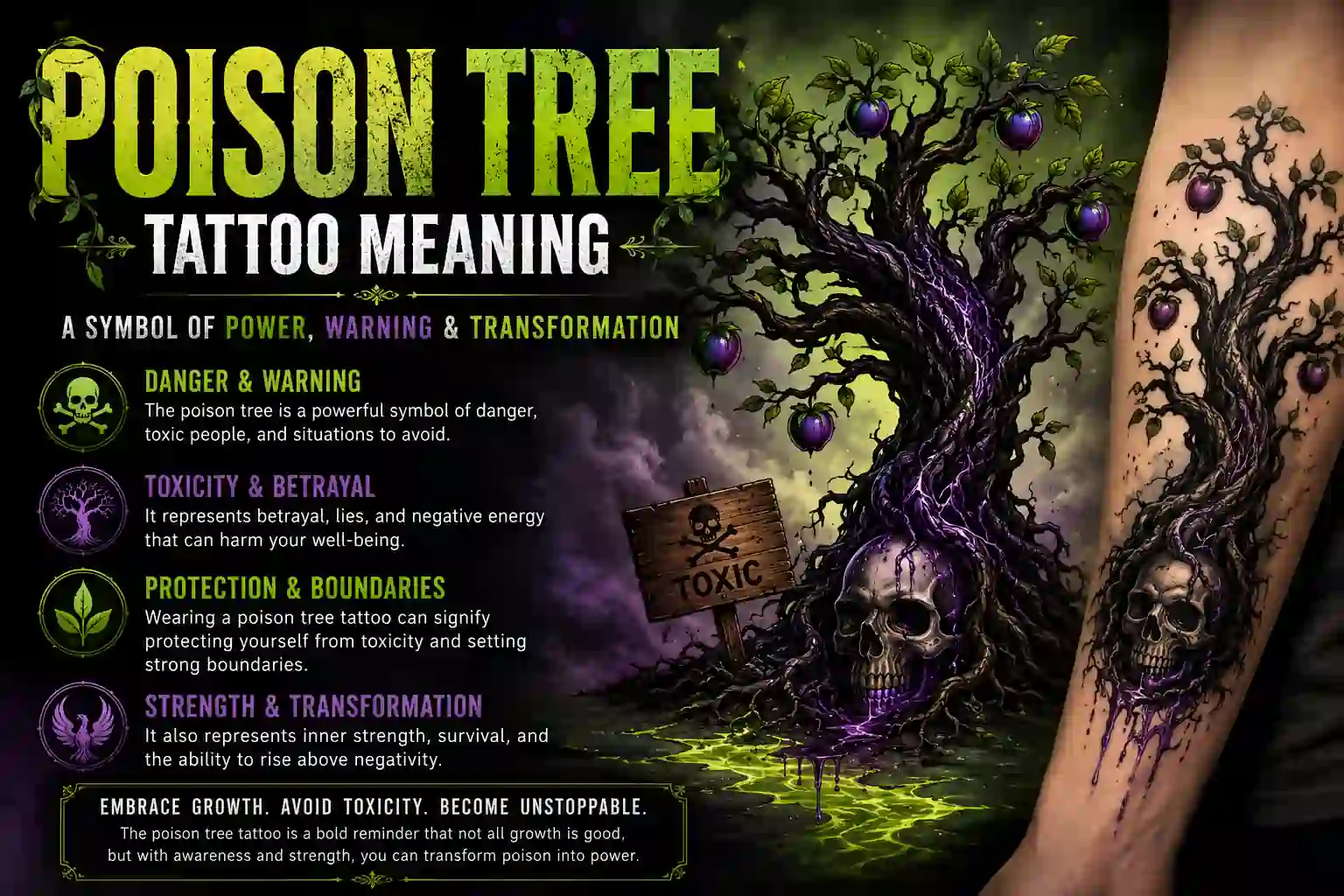
A poison tree tattoo carries profound weight. This design speaks to transformation, consequence, and the duality between beauty and danger. Whether you’re drawn to its aesthetic or its deeper meaning, understanding what this symbol represents helps you make an informed decision about permanently marking your body. We’ll explore everything from historical roots to modern interpretations, helping you grasp why people choose this haunting image and what message it conveys to others.Poison Tree Tattoo Meaning
What Does a Poison Tree Tattoo Actually Symbolize?
The poison tree tattoo isn’t a straightforward symbol. Its meaning shifts based on context, cultural background, and personal interpretation.
Core meanings include:
• Consequences of actions — Drawing from William Blake’s poem “A Poison Tree,” this design represents how anger and resentment grow when left unaddressed
• Toxic relationships — Some people get it to mark a period of their life dealing with harmful connections
• Personal transformation — The shift from something beautiful to something dangerous mirrors personal evolution
• Duality and contradiction — A tree (typically representing growth and life) poisoned (representing death and decay) captures life’s paradoxes
• Rebellion and defiance — The dark aesthetic appeals to those rejecting conventional symbolism
The specific meaning depends entirely on what resonates with the person wearing it. No two poison tree tattoos carry identical significance.
The Literary Origins: William Blake’s “A Poison Tree”
Understanding Blake’s 1794 poem unlocks the deeper cultural significance of this tattoo design.
The poem’s premise:
Blake describes how he fed his anger toward a friend by watering it daily. This anger grew into a poison tree that bore fruit—fruit that killed his enemy. The poem explores how suppressed emotions, particularly rage, transform into destructive forces.
Why people connect to this:
The poem resonates because it captures a universal experience: watching small resentments grow into serious problems. When someone gets a poison tree tattoo referencing Blake, they’re usually acknowledging a past struggle with anger, betrayal, or toxic situations they’ve overcome.
The literary connection elevates this tattoo beyond mere aesthetics. It positions the wearer as someone thoughtful about symbolism and personal meaning.
Poison Tree Tattoo Design Variations
Poison tree tattoos come in countless visual styles. Each variation emphasizes different symbolic elements.
Common design approaches:
Realistic botanical style
Features anatomically detailed leaves, bark texture, and poisonous fruits (often depicted as dark berries or apples). Artists add thorns, gnarled branches, and shadowing to emphasize the “poison” aspect. This style appeals to those wanting technical artistry.
Dark and twisted interpretation
Incorporates skeletal branches, wilting leaves, and sometimes skull imagery or death symbols woven throughout. This version emphasizes decay and destruction rather than natural growth.
Minimalist approach
Simple line work showing a tree silhouette with a few key details suggesting toxicity. Perhaps a single poisonous fruit, twisted trunk, or bare branches. This works well for those wanting subtlety.
Hybrid designs
Combines the tree with other meaningful elements—a serpent coiled around the trunk (referencing Eden), thorns forming the canopy, or the tree growing from a skull. These personalized versions tell more complex stories.
Watercolor style
Uses color washes and bleeding ink to create an ethereal, somewhat sinister effect. Purples, blacks, and deep greens dominate. The softer application contrasts with the dark subject matter.
The design you choose should align with what the symbol means to you personally.
Placement Guide: Where to Get Your Poison Tree Tattoo
Where you place this tattoo affects its visibility, longevity, and impact.
Popular placement options:
| Placement | Size Range | Visibility | Pain Level | Best For |
| Forearm | Medium to Large | Always visible | Low to Medium | People wanting their meaning known |
| Back/Shoulder | Large | Partially hidden by clothing | Low | Detailed, realistic designs |
| Thigh | Medium to Large | Hidden by clothing | Low | Those preferring privacy |
| Chest | Medium to Large | Varies with shirt choice | Medium | Statement pieces |
| Calf | Small to Medium | Often visible | Low | Balanced visibility |
| Ribcage | Medium to Large | Hidden | High | Pain tolerance needed |
| Wrist | Small to Medium | Highly visible | Medium | Daily reminders of meaning |
Consideration factors:
Your skin’s movement and stretching affect how the design ages. Areas with more natural movement (joints, ribs) may require touch-ups sooner. Choose placements where you can see the tattoo regularly if it serves as a personal reminder.
Color vs. Black and Gray: Which Style Suits Your Vision?
The color palette you select dramatically changes how your poison tree tattoo reads.
Black and gray advantages:
Clean, timeless aesthetic that ages gracefully. Works for all design styles. Easier to touch up. Complements all skin tones. Emphasizes shadow and depth. Most cost-effective option.
Color advantages:
Poison trees with deep purples, sickly greens, and blood reds create impact. Colors can highlight specific poisonous elements. More visually striking. Allows for personal customization. Better storytelling through color choices.
Hybrid approach:
Many artists blend both—keeping the main tree in black and gray while adding color accents to poisonous fruits or flowers. This balances sophistication with visual interest.
The longevity difference is minimal with modern ink. Your choice comes down to personal preference and what message you want the tattoo to convey at first glance.
Poison Tree Tattoo in Different Cultures
Poison trees carry meaning across multiple cultural traditions.
Western interpretation:
Rooted primarily in Blake’s literary work and Judeo-Christian symbolism (the poisoned fruit echoing the forbidden fruit). Often represents personal struggle and moral complexity.
Asian philosophies:
Some traditions view poison as transformation—a substance that kills in large doses but heals in small ones. A poison tree becomes a symbol of balance between opposing forces. Yin and yang concepts apply here.
Occult and esoteric meanings:
Within certain spiritual circles, poison trees represent forbidden knowledge or the shadow self. They symbolize accessing darker aspects of consciousness for growth.
Indigenous traditions:
Many cultures have genuine poisonous trees (like the manchineel tree). In those contexts, the tree represents respect for nature’s power and the importance of understanding what’s dangerous versus safe.
Street and prison culture:
In some communities, the poison tree tattoo carries associations with survival through difficult circumstances or marking a turning point away from a harmful lifestyle.
Understanding these cultural layers helps you appreciate what your tattoo might mean to different audiences.
Personal Stories: Why People Choose This Design
Real motivations behind poison tree tattoos reveal their genuine significance.
Common reasons people get them:
Recovery and reflection
Someone leaves an abusive relationship and gets a poison tree tattoo to mark that chapter. It represents the toxic situation they survived and overcame. The tattoo becomes proof they processed that experience.
Anger management milestone
A person who struggled with uncontrolled anger gets it after years of therapy and growth. Blake’s poem directly inspired their choice—they’re acknowledging how they once let resentment poison their life.
Artistic appreciation
Literature enthusiasts get poison tree tattoos purely for Blake’s poetic genius. They appreciate the symbolism without necessarily connecting it to personal trauma.
Rebellion and identity
Younger people sometimes choose it because the aesthetic feels authentic to them. The darkness matches their worldview or artistic expression. Over time, the meaning deepens.
Memorial purpose
Someone gets it after losing a person to addiction or self-destructive behavior. The poison tree represents how that person’s choices poisoned their own life and affected everyone around them.
Philosophical statement
Some people view it as commentary on society, toxic systems, or the human capacity for self-destruction. It’s their way of saying they see the darkness but choose awareness anyway.
Each story is different. Your reason for wanting one is equally valid.
Finding the Right Tattoo Artist
Your artist makes or breaks your poison tree tattoo.
What to look for:
Portfolio review
Check their previous work. Do they have experience with botanical designs? Can they render intricate detail? Do their trees look natural or stilted? Their past work predicts your results.
Specialization matters
Some artists excel at realism, others at minimalism. Match their specialty to your vision.Someone seeking lifelike detail may be let down by a watercolor specialist.
Experience level
This tattoo works better with experienced artists. Botanical elements require understanding how organic forms translate to skin. Poison tree tattoos on beginners’ work often look stiff.
Consultation quality
A good artist asks questions. What does the poison tree mean to you? What design elements matter most? They sketch variations before finalizing the design. They take your vision seriously.
Facility standards
Clean studio, proper sterilization, proper licensing. Your health depends on these standards. Don’t compromise.
Pricing
Expect to pay more for quality work. A poison tree tattoo from a talented artist costs $300-$1,500+ depending on size and detail. This isn’t a budget decision—invest in quality.
Communication style
You want someone who explains their choices and listens to feedback. Collaboration produces better results than artist-led decisions alone.
Aftercare and Tattoo Longevity
Getting the tattoo is half the battle. Proper aftercare determines how it ages.
First two weeks (critical phase):
• Two to three times a day, gently wash with unscented soap.
• Apply thin layer of fragrance-free lotion or recommended aftercare product
• Avoid submerging in water (baths, swimming, hot tubs)
• Don’t expose to direct sunlight
• Sleep on clean sheets
• Wear loose clothing over the tattoo
• Don’t pick or scratch, even if it itches
• Avoid heavy sweating and intense exercise
Weeks 3-6:
• Continue moisturizing as needed
• Gradually return to normal activities
• Still limit sun exposure
• Watch for signs of infection (increasing redness, warmth, pus)
Long-term care:
Your poison tree tattoo will last your lifetime, but its appearance changes. Sun exposure causes fading. Proper sunscreen application (SPF 30+) when your tattoo is visible extends vibrancy. Your artist will recommend touch-up timing—typically every 3-5 years depending on exposure and ink quality.
Well-cared-for tattoos age gracefully. Neglected ones fade and blur. The effort you put in now pays dividends decades later.
Combining Poison Tree Tattoos with Other Symbols
Many people enhance poison tree designs with complementary imagery.
Effective combinations:
With snakes or serpents
References the Garden of Eden narrative. The snake coiled around the tree creates mythological depth. This works especially well for those interested in spiritual symbolism.
With skulls or bones
Emphasizes mortality and the destructive nature of poison. Creates a memento mori aesthetic—reminding the wearer of life’s fragility.
With thorns or barbed wire
Adds texture and reinforces the painful aspect. Thorns naturally coexist with trees, making this feel organic rather than forced.
With quotes or dates
Adding Blake’s words or a significant date personalizes the tattoo further. Placement matters—keep words readable and proportional.
With flowers or blossoms
The paradox of beauty alongside poison becomes visual. Delicate flowers growing from a poisoned tree create ironic contrast.
With roots
Extending visible roots below ground suggests deeper issues being unearthed. Roots often get darker or more twisted to suggest the hidden poison.
The best combinations tell your personal story. Avoid adding elements just because they look cool. Each addition should deepen meaning.
Poison Tree Tattoo Meaning Across Age Groups
The significance shifts depending on life stage.
Teenagers and young adults (15-25):
Often drawn to the rebellious aesthetic. Blake’s poetry appeals to those first encountering literary symbolism. Frequently represents angst or rejection of conventional values. Sometimes impulsive—chosen for appearance before understanding deeper meaning.
Young adults (25-35):
More likely to connect to personal experiences with toxic relationships or situations. The tattoo marks survival and recovery. More thoughtful about placement and design. Better equipped to articulate why it matters.
Middle-aged people (35-50):
Often get poison tree tattoos as reflections on past struggles. The meaning has been earned through life experience. They appreciate Blake’s literary significance. Sometimes getting them as second tattoos after years of consideration.
Older adults (50+):
Rare in this demographic but usually deeply meaningful. Represents major life themes or philosophical beliefs. Chosen with full understanding of permanence and significance.
Your age influences both your reasons and how others perceive your choice. That’s worth considering.
Addressing Common Misconceptions
Several myths surround poison tree tattoos.
“It means you’re a bad person”
False. The tattoo represents acknowledging complexity, not endorsing toxicity. It’s introspective symbolism, not a warning label for others.
“It’s only for people who’ve been abused”
False. While some survivors choose it, others get it for literary appreciation, artistic reasons, or philosophical interest. The meaning is personal.
“It looks evil or demonic”
Subjective. Some perceive it as creative expression, while others believe it to be beautifully dark. The aesthetic is intentionally moody, but that doesn’t make it “evil.” Context and personal meaning matter more than appearance.
“You’ll regret it”
Maybe, maybe not—like any tattoo. Regret comes from poor planning or hasty decisions. Taking time to consider meaning reduces regret probability.
“It limits job opportunities”
Depends on your field and tattoo placement. A poison tree on your forearm might affect certain jobs. On your back, it’s invisible to employers. Modern workplaces are increasingly tattoo-accepting anyway.
“You’re copying Blake without understanding him”
Some people do, sure. But many genuinely engage with the poem’s themes. Don’t assume someone’s knowledge based on their tattoo choice.
Separating myth from reality helps you make an informed decision.
Frequently Asked Questions About Poison Tree Tattoos
Q1: Does a poison tree tattoo have negative connotations?
A: Not inherently. Like any symbol, meaning depends on context and the wearer’s intention. A poison tree can represent darkness, but more often represents acknowledging and overcoming darkness. It’s introspective rather than inherently negative.
Q2: How much does a quality poison tree tattoo cost?
A: Expect $400-$1,500+ depending on artist experience, design complexity, and size. Small, minimalist designs cost less; large, detailed pieces cost more. Don’t prioritize cheap over quality—this is permanent.
Q3: Can I add to my poison tree tattoo later?
A: Yes. Many people start with a simple design and add elements over time. Discuss expansion possibilities with your original artist if possible, ensuring the new work complements existing design.
Q4: Is there a “right” poison tree tattoo design?
A: No. The right design aligns with your personal meaning and aesthetic preference. Instead than replicating someone else’s tattoo, take the time to locate an artist whose style aligns with your vision.
Q5: Will my poison tree tattoo fade?
A: All tattoos fade over time, especially with sun exposure. Black and gray fade less noticeably than color. Proper sunscreen application and professional touch-ups keep it vibrant. Most people need touch-ups every 3-5 years.
Q6: What if I’m worried about judgment for getting this tattoo?
A: Take location into account; concealed spaces allow you to manage who is aware of it. Remember that most people don’t assign as much meaning to tattoos as wearers do. Anyone worth knowing respects your choices and reasons.
Conclusion: Making Your Decision
A poison tree tattoo isn’t a casual choice. It requires genuine consideration of meaning, design, placement, and artist. You are pledging to permanently imprint a symbol of philosophical, literary, and personal meaning on your body
Take time. Don’t rush. Sketch designs, research artists, and sit with your decision. The best poison tree tattoos come from clarity about what they mean to you specifically—not what others might think they mean.
If you’ve read this far and still feel drawn to it, that’s a good sign. Your motivation likely runs deeper than surface aesthetics. That depth is what transforms a tattoo from decoration into meaningful body art.
Ready to move forward? Start your artist search today. Look at portfolios, ask questions, and trust your instincts. The right artist-design combination is out there waiting to bring your vision to life.
What aspects of poison tree symbolism resonate most with you? Share your thoughts in the comments below.